Working from home has become a common reality for many, and creating a workspace that promotes both comfort and productivity is essential. A relaxing environment can greatly enhance focus, reduce stress, and make your work hours more enjoyable. In this post, we’ll explore practical tips to help you design a home workspace that is both calming and efficient.
Why a Relaxing Workspace Matters
Your workspace affects how you think and feel during the day. An organised and soothing environment can improve concentration, prevent burnout, and boost overall productivity. On the other hand, a cluttered or uncomfortable space may increase distractions and fatigue. By intentionally designing your workspace, you create a setting that not only supports your tasks but also nurtures your wellbeing.
Choose the Right Location
Finding the best spot in your home for your workspace is the first step.
– Natural light: Position your desk near a window if possible. Natural light improves mood and reduces eye strain.
– Quiet area: Select a place that is calm and free from household noise or distractions.
– Space availability: Make sure there is enough room for your desk, chair, and any equipment you need comfortably.
Invest in Comfortable Furniture
Comfort is key to maintaining productivity throughout the day.
– Ergonomic chair: Choose an adjustable chair with good lumbar support to prevent back discomfort.
– Desk height: Your desk should allow your elbows to rest at a 90-degree angle when typing.
– Footrest: If your feet don’t sit flat on the floor, consider a footrest for better posture.
Organise Your Space Thoughtfully
A tidy and organised workspace helps keep your mind clear.
– Declutter regularly: Remove unnecessary papers and items to avoid distractions.
– Storage solutions: Use shelves, drawers, or organisers to keep supplies within easy reach but out of sight.
– Cable management: Use clips or ties to keep cords neat and prevent tangling.
Incorporate Calming Colours and Decor
The colours and decorations in your workspace influence how relaxed you feel.
– Colour choices: Use soft, neutral shades like light blues, greens, or greys to create a calm atmosphere.
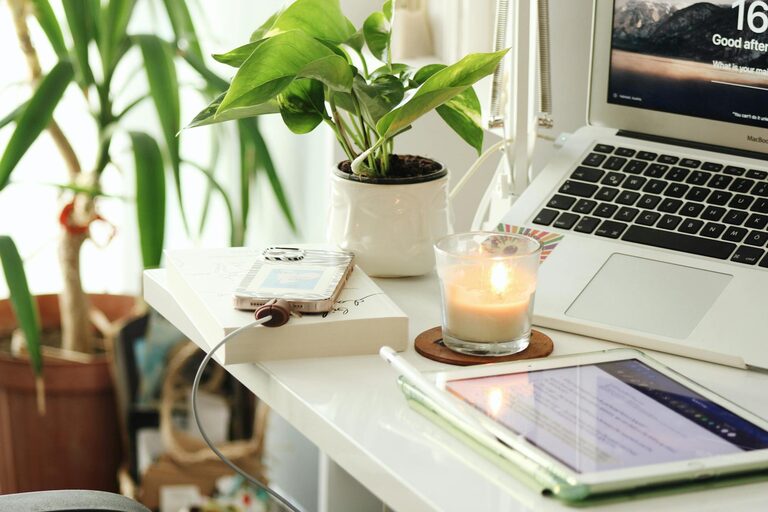
– Personal touches: Add plants, photos, or artwork that make the space welcoming without overwhelming it.
– Lighting: Use warm light bulbs and consider desk lamps with adjustable brightness.
Maintain Good Air Quality and Temperature
Fresh air and comfortable temperatures help you stay alert and comfortable.
– Ventilation: Open windows or use an air purifier to ensure fresh air circulation.
– Temperature control: Adjust heating or cooling to keep the room at a pleasant temperature.
– Humidity: Maintain moderate humidity levels to avoid dryness or stuffiness.
Utilise Technology Wisely
Using the right technology can streamline your work without adding stress.
– Monitor position: Place screens at eye level to prevent neck strain.
– Keyboard and mouse: Select ergonomic models for comfort.
– Noise control: Use headphones or white noise machines if background sounds distract you.
Establish a Routine and Boundaries
Creating habits around your workspace helps you maintain a work-life balance.
– Set working hours: Define clear start and finish times to avoid overworking.
– Take breaks: Incorporate short breaks every hour to stretch and relax.
– Limit distractions: Inform others in your household of your work times to minimise interruptions.
Add Elements to Promote Relaxation
Including elements that encourage calm can refresh your mind during busy days.
– Plants: Indoor plants improve air quality and add a touch of nature.
– Aromatherapy: Use subtle scents like lavender or citrus to boost mood.
– Comfort items: Keep a cosy blanket or cushion nearby for added comfort during breaks.
Summary
Creating a relaxing home workspace is about more than just aesthetics; it’s about fostering an environment where comfort and productivity coexist. By choosing the right spot, investing in ergonomic furniture, organising thoughtfully, and adding calming touches, you can transform your home office into a space that supports your best work. Remember to maintain good habits and adapt your environment as needed to keep it fresh and inspiring.
Working comfortably doesn’t have to be complicated – small changes can make a big difference. Start with these tips, and tailor your workspace to suit your personal needs and preferences.